
Conspiracy Theory Belief During the Pandemic
Authors: S. Sena Akkoç
*Department of Sociology, Boğaziçi University
Funders of research: Our project, coded 21B08SUP2, is funded by BU Scientific Research Projects.
Click here to access the PDF version of this report.
This report investigates conspiracy theory beliefs in Turkey during the COVID-19 pandemic, focusing on health-related issues such as COVID-19 vaccines, the pharmaceutical industry, and their variation across age groups. The data for this study were drawn from the 2022 Turkish COVID-19 Values Survey (TCVS), conducted face-to-face with 1,500 participants.
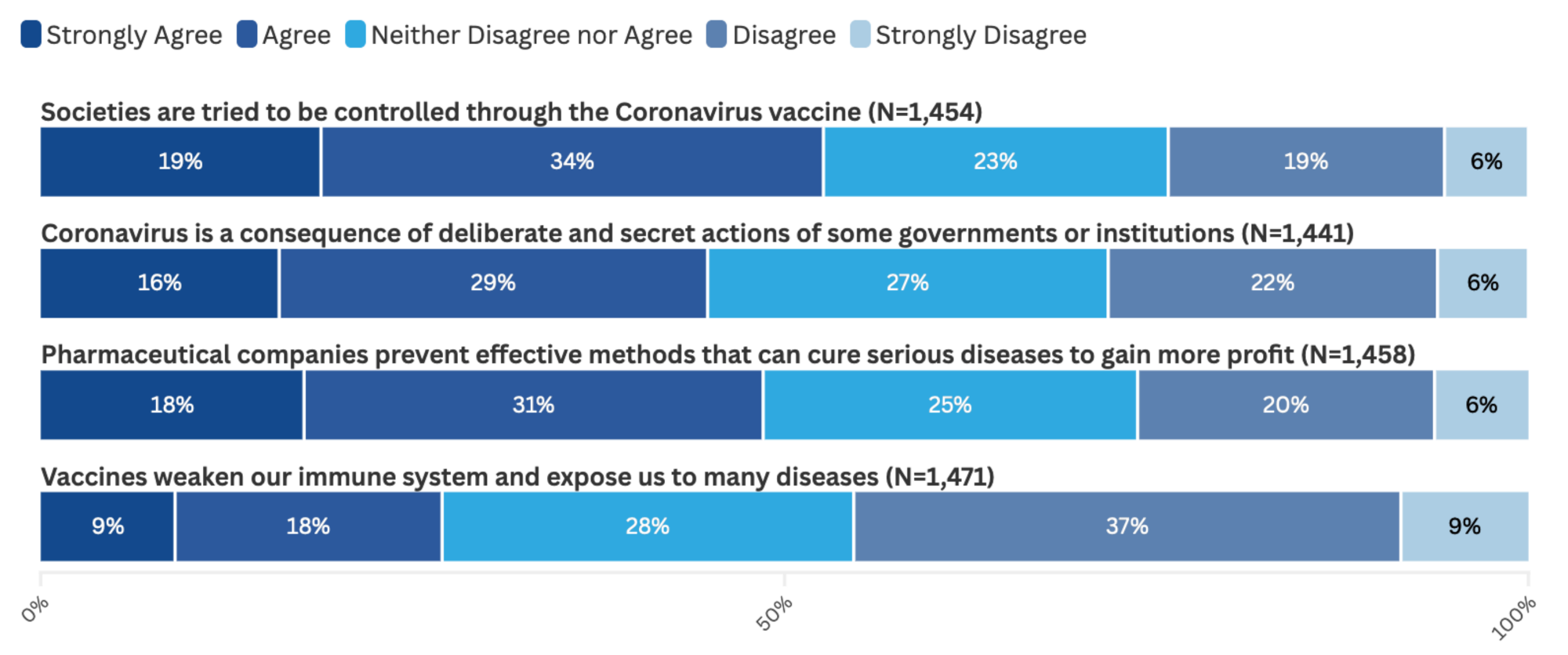
The conspiracy theories in the TCVS focus on some of the most debated issues during the pandemic, around the vaccines, COVID-19 vaccines, pharmaceutical companies and the origin of the coronavirus (See Figure 1).
Figure 1. Belief in Conspiracy Theories
Respondents’ ages are categorized into four groups: 18–29, 30–49, 50–74, and 75+. For the first three conspiracy theories, the levels of agreement differ significantly across these age groups. However, the pattern of belief varies for each conspiracy theory (Figure 2).
Figure 2. Average belief in conspiracy theories by age groups
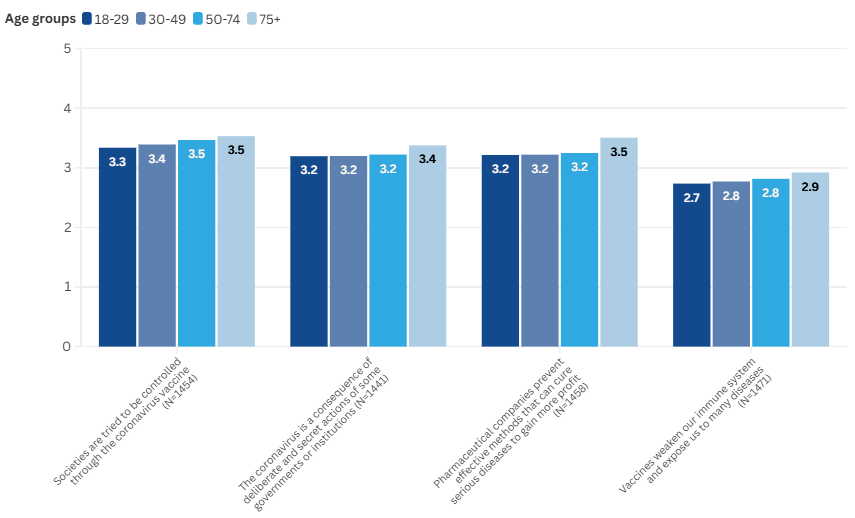
The survey results reveal significant variation in conspiracy beliefs across different age groups, highlighting the need for targeted communication strategies. Specifically, older adults (75+) and middle-aged individuals (30–49) show higher levels of agreement with various conspiracy theories, suggesting that these groups may require tailored approaches to counteract misinformation, particularly regarding vaccines.
Sociology Data Lab (SDL)
Boğaziçi University
socdatalab@bogazici.edu.tr